

Ink vs Toner: What's the Difference and Which Is Best for Your Business?
Whether you're printing invoices, reports or everyday paperwork, choosing the right printer supplies is essential for keeping your business running smoothly. But when it comes to ink vs toner, which is the better option for your workplace?
Although both produce printed documents, they work differently and offer distinct benefits in terms of cost, efficiency and print quality.
In this guide, we'll explore the differences between ink and toner, their advantages and how to choose the right option for your business.
What Is the Difference Between Ink and Toner?
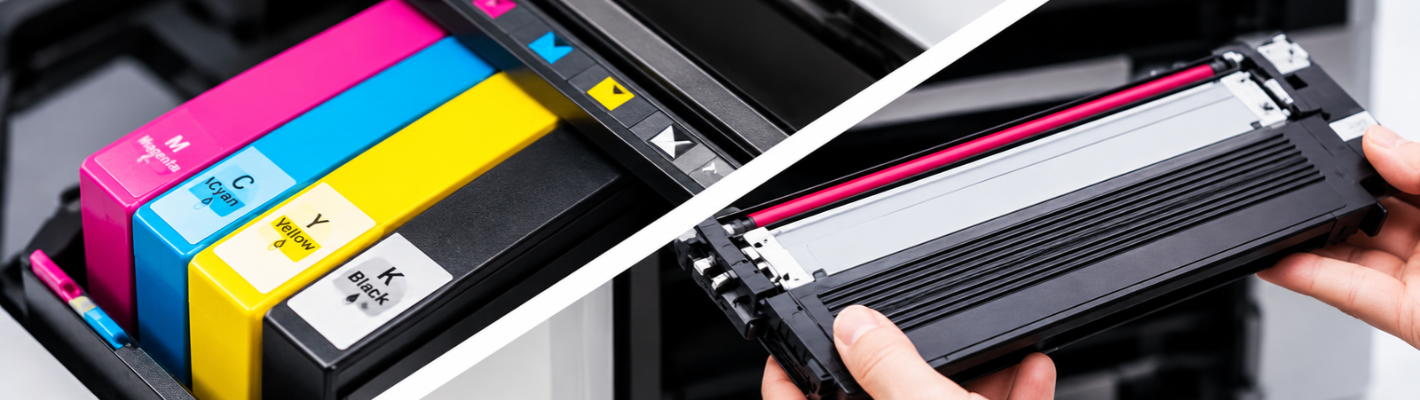
The main difference is simple: ink is a liquid used in inkjet printers, while toner is a fine powder used in laser printers.
Inkjet printers spray tiny droplets of ink onto paper to produce text and images. Laser printers use an electrostatic process and heat to fuse toner powder onto the page.
Both deliver quality results, but the best choice depends on your printing volume, budget and business requirements.
| Feature | Ink | Toner |
|---|---|---|
| Printer type | Inkjet | Laser |
| Material | Liquid ink | Fine powder |
| Initial printer cost | Often lower | Often higher |
| Printing speed | Often slower | Typically faster |
| Best for | Photos and colour documents | Text and high-volume printing |
| Cartridge yield | Often lower | Often higher |
| Cost per page | Can be higher | Often lower for frequent printing |
What Is Printer Ink?
Printer ink is a liquid used in inkjet printers, commonly found in smaller offices and workplaces requiring detailed colour printing.
Advantages of Inkjet Printers
-
Excellent colour quality: Ideal for graphics, images, presentations and marketing materials.
-
Lower upfront costs: Many inkjet printers are affordable to purchase.
-
Suitable for smaller workloads: A practical choice for businesses with occasional printing requirements.
Disadvantages of Inkjet Printers
Ink cartridges may require more frequent replacement, particularly in busy workplaces. Ink can also dry out or cause blocked printheads if a printer is left unused for extended periods.
For businesses printing large quantities of documents, these factors can increase running costs and maintenance requirements.
What Is Printer Toner?
Toner is a fine powder used in laser printers and many photocopiers. It is transferred onto paper and fused using heat, producing sharp, professional-looking documents.
Laser printers are widely used in offices, schools, healthcare facilities and other workplaces with regular printing demands.
Advantages of Toner Cartridges
-
Higher page yields: Toner cartridges often print more pages before needing replacement.
-
Faster printing: Laser printers are typically well suited to producing large volumes of documents quickly.
-
Lower cost per page: Higher cartridge yields can make toner more economical for frequent printing.
-
Less risk of drying out: Unlike liquid ink, toner powder does not dry out in the same way.
Disadvantages of Toner Cartridges
Laser printers and toner cartridges generally have higher upfront costs. While they produce excellent text documents, inkjet printers may be better suited to specialist photographic printing.
Ink vs Toner: Which Is More Cost-Effective?
For businesses looking to reduce printing expenses, it's important to consider more than the initial cartridge price.
One of the most useful comparisons is cost per page, which measures how much each printed page costs based on cartridge price and estimated yield.
For example:
-
An ink cartridge costing £30 with a yield of 300 pages costs approximately 10p per page.
-
A toner cartridge costing £80 with a yield of 2,000 pages costs approximately 4p per page.
These are illustrative figures, but they demonstrate how a more expensive cartridge can offer better long-term value.
Actual costs vary depending on the printer, cartridge and printing habits. High-capacity ink tank printers can also deliver very competitive running costs.
For businesses producing hundreds or thousands of documents each month, choosing a printer with a lower cost per page can help control expenditure.
Which Is Best for Your Business?
The right choice depends on your industry, printing requirements and how frequently your equipment is used.
Small Offices and Businesses
For occasional printing and colour-rich documents, inkjet printers can provide an affordable and convenient solution.
However, businesses regularly producing invoices, reports and contracts may benefit from the speed and efficiency of a laser printer.
Schools and Educational Facilities
Schools and colleges often require large quantities of worksheets, teaching resources and administrative paperwork.
Laser printers are particularly useful for high-volume text printing, while inkjet printers can be suitable for colourful educational materials.
Healthcare Facilities and Pharmacies
Healthcare organisations rely on dependable printing for administrative paperwork, patient information and other essential documents.
Laser printers can support regular document printing, although specialist applications such as certain labels may require dedicated equipment and consumables.
Hospitality and Retail Businesses
Hotels, restaurants and retail businesses use printers for invoices, booking confirmations, reports and administrative tasks.
Laser printers can be suitable for busy offices, while inkjet printers may be more practical for occasional colour printing. Specialist receipt printers often use thermal technology instead.
How to Choose the Right Printer Supplies
Selecting the correct ink or toner cartridges is just as important as choosing the printer itself.
Here are four key considerations:
-
Check compatibility: Always confirm that cartridges match your printer's make and model.
-
Consider cartridge yield: High-yield cartridges may offer better value for businesses with frequent printing requirements.
-
Compare running costs: Calculate the estimated cost per page rather than focusing solely on the purchase price.
-
Plan ahead: Keeping essential printer supplies in stock can prevent unexpected interruptions.
For organisations managing multiple printers or locations, a consistent purchasing approach can also simplify procurement and stock control.
How Can Businesses Reduce Printing Costs?
Whether your workplace uses ink or toner, a few practical changes can help reduce unnecessary expenditure.
-
Print double-sided to reduce paper consumption.
-
Use black-and-white printing where colour isn't essential.
-
Choose high-yield cartridges when compatible and cost-effective.
-
Monitor printing habits to minimise unnecessary printing.
-
Maintain appropriate stock levels to avoid last-minute purchases.
-
Source supplies from a reliable supplier to simplify repeat ordering.
These small improvements can make a meaningful difference to overall printing costs, particularly in busy workplaces.
Find the Right Printer Supplies with Premvan
Choosing between ink and toner ultimately depends on your business's printing volume, budget and operational needs.
Inkjet printers are often ideal for detailed colour printing and smaller workloads, while laser printers and toner cartridges are typically better suited to regular, high-volume document production.
At Premvan, we understand the importance of reliable workplace supplies in keeping everyday operations running efficiently.
Whether you're replacing printer consumables or reviewing your office supply requirements, choosing the right products can help minimise disruption and manage costs.
Find the perfect ink or toner for your printer with our ink and toner finder.
Frequently Asked Questions
Is toner better than ink for office printing?
Toner is often more suitable for businesses printing large volumes of text-based documents, while inkjet printers can be better for detailed colour images and occasional printing.
Is toner cheaper than ink?
Toner cartridges generally cost more upfront but often have higher page yields, potentially making them more economical for high-volume printing.
Does toner last longer than ink?
Toner cartridges often produce more pages than standard ink cartridges. Toner powder also doesn't dry out like liquid ink, making it useful for workplaces with irregular printing schedules.
Can you use ink in a laser printer?
No. Laser printers use toner powder, while inkjet printers use liquid ink. The two are not interchangeable.
What are high-yield printer cartridges?
High-yield cartridges contain more usable ink or toner than standard cartridges, allowing businesses to print more pages before needing replacements.
