


COSHH for Schools Explained: A Practical Guide to Compliance and Safety
COSHH for Schools Explained
From cleaning classrooms and maintaining washrooms to carrying out science experiments and site maintenance, schools rely on a variety of products that contain hazardous substances. While these products are essential for keeping educational environments clean, safe and operational, they must also be managed responsibly.
The Control of Substances Hazardous to Health (COSHH) Regulations 2002 require employers to assess and control the risks posed by hazardous substances in the workplace. For schools, this means ensuring that chemicals are stored correctly, staff are properly trained, and suitable procedures are in place to minimise risks.
Whether you're a facilities manager, school business manager or site supervisor, understanding COSHH is an important part of maintaining a safe learning environment.
What is COSHH?
COSHH is a set of UK regulations designed to protect people from the harmful effects of hazardous substances used at work. In a school environment, this extends far beyond science laboratories. Everyday cleaning chemicals, disinfectants, paints, adhesives and grounds maintenance products may all fall under COSHH if they present a risk to health.
Hazardous substances can cause problems ranging from skin irritation and burns to respiratory conditions if they are used incorrectly or without appropriate precautions. COSHH helps schools identify these risks before they lead to accidents or long-term health issues.
Why does COSHH matter in schools?
Schools are busy environments where hundreds, and sometimes thousands, of people use the same facilities every day. Cleaning products and maintenance chemicals are often used before, during and after the school day, making it essential that they are handled safely.
Good COSHH management not only helps protect cleaning staff, caretakers and contractors, but also reduces the risk of pupils or visitors coming into contact with hazardous substances. It also demonstrates that the school is meeting its legal responsibilities under health and safety legislation.
Beyond compliance, effective chemical management can help reduce incidents, improve staff confidence and contribute to a cleaner, healthier environment for everyone on site.
Who is responsible for COSHH?
The legal responsibility for COSHH sits with the employer, whether that is a local authority, academy trust or independent school. In practice, however, responsibility is often shared between several members of staff.
Facilities managers, site managers, school business managers and cleaning supervisors all play an important role in ensuring hazardous substances are managed safely. Staff who use cleaning chemicals or other hazardous products should receive appropriate training so they understand how to work safely and respond to potential incidents.
Carrying out a COSHH assessment
A COSHH assessment is simply a structured way of identifying risks and deciding how they can be controlled. Before introducing a new cleaning product or chemical, schools should consider who could be exposed, how exposure might occur and what measures can be put in place to reduce the risk.
The assessment should also examine whether a safer alternative is available and whether the product is genuinely required. Once completed, COSHH assessments should be reviewed periodically or whenever products, procedures or working practices change.
Keeping these assessments up to date ensures that safety procedures remain relevant and effective.
Safe storage and handling of chemicals
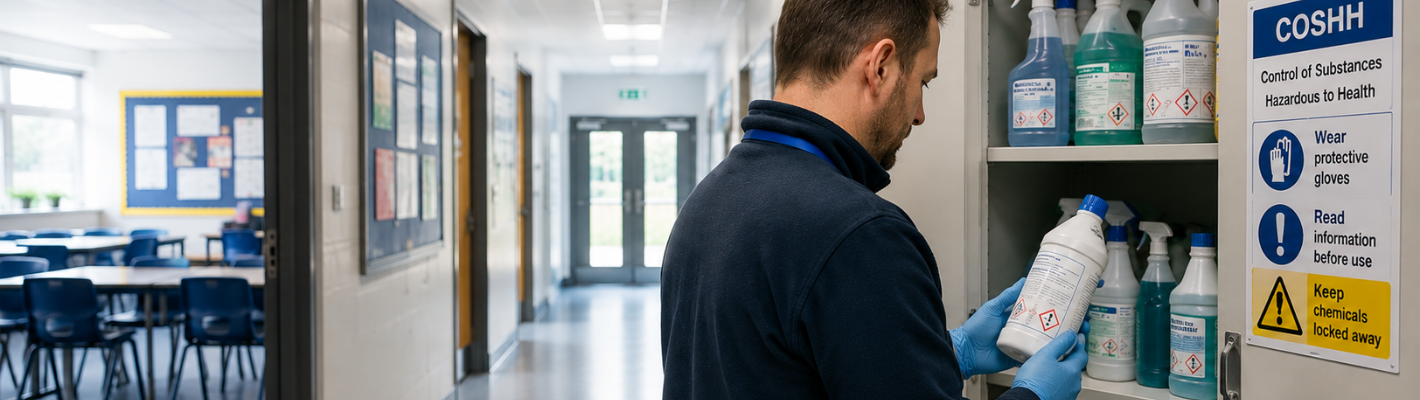
Correct storage is one of the simplest yet most important aspects of COSHH compliance. Cleaning chemicals should always be stored securely in designated cupboards or storage areas that are inaccessible to pupils. Products should remain in their original containers with manufacturer labels intact, making it easy for staff to identify them and follow the correct handling instructions.
Schools should also avoid storing incompatible chemicals together. For example, bleach and acidic cleaning products should always be kept separate, as mixing them can release toxic chlorine gas. Staff should never decant chemicals into unlabelled bottles or food containers, as this significantly increases the risk of accidental misuse.
Training staff and providing the right equipment
Even the safest products can become hazardous if they are used incorrectly. That's why staff training forms a key part of COSHH compliance.
Cleaning teams, caretakers and maintenance staff should understand how to use products safely, what personal protective equipment (PPE) is required and what action to take if a spill or accident occurs. Manufacturers' Safety Data Sheets provide valuable information on hazards, storage requirements and first aid measures, and should always be easily accessible.
Providing suitable gloves, eye protection or protective clothing where required further reduces the likelihood of injury and helps staff carry out their work safely.
Choosing the right cleaning products
The products a school purchases can make a significant difference to both safety and efficiency. Commercial-grade cleaning products are designed for regular professional use and are typically supplied with clear labelling, Safety Data Sheets and detailed usage instructions.
Working with a trusted supplier also makes it easier to maintain accurate COSHH records and access the information needed for risk assessments. In many cases, choosing concentrated products with controlled dosing systems can help reduce waste while minimising the risk of overexposure.
Avoiding common COSHH mistakes
Many COSHH issues arise not because of the products themselves, but because of poor processes. Outdated risk assessments, missing Safety Data Sheets and inadequate staff training are among the most common problems identified during inspections.
Simple oversights, such as leaving cleaning cupboards unlocked or transferring chemicals into unlabelled containers, can quickly become serious safety risks. Regular reviews of procedures and stock can help identify these issues before they become compliance concerns.
Creating a safer school environment
COSHH should be viewed as part of a school's wider commitment to health, safety and wellbeing. By carrying out thorough risk assessments, storing chemicals correctly, providing appropriate staff training and selecting suitable commercial cleaning products, schools can significantly reduce the risks associated with hazardous substances.
A proactive approach not only supports legal compliance but also helps create a safer, healthier environment for pupils, staff and visitors alike. As schools continue to prioritise hygiene and operational efficiency, effective COSHH management remains an essential part of day-to-day facilities management.
